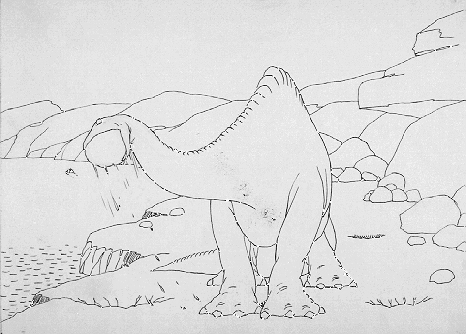
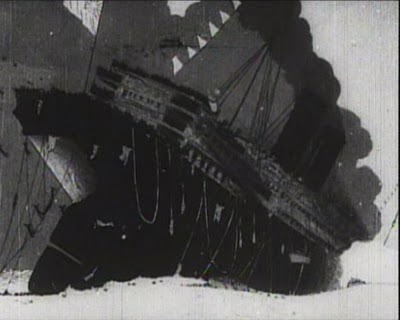
Winsor McCay was an American cartoonist and animator. He is well known for his short animation work. He pioneered in animation and especially with “Gertie the Dinosaur”, “The Sinking of Lusitania” and “Little Nemo in Slumberland”.
 |
| Figure 1: Winsor McCay. |
Winsor McCay was born in Michigan in 1871. From his young age Winsor was interested in drawing. His father was a real estate agent and encouraged him to become a businessman. During his life he did many jobs. ”He got paid for showing his observational skills in public, making sketches, large-sized posters and billboards for freaky traveling circuses and dime museums.” (Keller, Unknown) He also did comic strips for newspapers and vaudeville acts.
 |
| Figure 2: Winsor McCay during a vaudeville act. |
Before moving to New York Winsor worked due to economic difficulties as cartoonist/reporter for the Cincinnati Commercial Tribune. There he learned and tuned his talent as a draftsman. Winsor McCay used the alias Silas instead of his name in his comic strips.
 |
| Figure 3: "Little Nemo in Slumberland" poster. |
The setup of the comic strip was about the dream of a little boy called Nemo. Even the fact it was comic strip for little children it was far from a simple children's fantasy, it was often dark, surreal, threatening, and even violent.
 |
| Figure 4: Picture from "Gertie the Dinosaur". |
 |
| Figure 5: Picture from "The Sinking Of The Lusitania". |
Illustration List:
Figure 1: Winsor McCay. [online]
(Accessed: 19/6/2012)
Figure 2: Winsor McCay performing a vaudeville act. [online]
(Accessed: 19/6/2012)
Figure 3: Little Nemo in Slumberland poster. [online]
(Accessed: 19/6/2012)
Figure 4: Gertie the Dinosaur. [online]
(Accessed: 19/6/2012)
Figure 5:Picture from Sinking of the Lusitania. [online]
(Accessed: 19/6/2012)
Bibliography
Keller, Ianus. (Unknown). Dreams and Obsessions on Shelf and Screen.
(Accessed: 19/6/2012)
Bob, Unknown (1996). Bob’s Comic Review.
(Accessed: 19/6/2012)
Hall, Phil (2004). WINSOR MCCAY: THE MASTER EDITION (DVD).
(Accessed: 19/6/2012)
North, Dan (2009). Winsor McCay’s The Sinking of the Lusitania.
(Accessed: 19/6/2012)