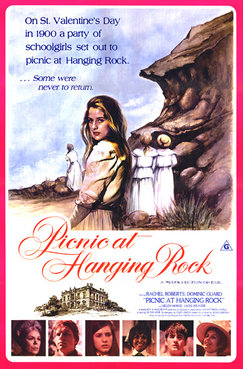
Figure 1: Film Poster
Don’t Look Now (1973) is a thriller film directed by Nicolas Roeg. The film has adopted its story by the short story by Daphne du Marieur. The film focuses on the life of a married couple John Baxter and Laura who have recently lost their daughter in a tragic accident in England. The film uses flashbacks from the past and some scenes that show to the audience the incidence of the accident of their daughter and some other things. “Flashbacks, flashforwards, and a suggestive series of recurrent images allow both the Baxters’ past tragedy and their future destiny to infect what we see in the film’s diegetic present.” (Bitel, 2011). The film gives you a particular experience of losing your child and in general it produces a massive effectively experience to the viewer. "Don't Look Now" brilliantly portrays the loves and losses we all experience, our here and now dictated by the fallibility of human nature and the cruelties of time.” (Putman, 2008). The couple moves to Venice where John has been offered a job. During their trip they meet 2 elder women in a restaurant where the one is blind and it claims that is in contact with their dead daughter Christine and says that there is a way to contact with her.

Figure 2: The elder woman with Laura
Laura faints and has been taken to the hospital. The scene where their daughter dies in the accident she is wearing a red dress. During the film the red color is the key color in the whole film. The film seems desaturated in general and in the scenes where the red color is visible it makes a huge difference to the audience’s eye.
Figure 3: Scene of the accident of Baxter's daughter
The director has made a very good job with the scenes and with the colors of Venice. It gives you the experience of being lost in Venice by filming in a particular way which has a big reflection to the audience eyes and minds. “… Mr. Roeg, who was a cameraman before… gets a great performance from Venice, which is all wintery grays, blues and blacks, the color of the pigeons that are always underfoot.” (Canby, 1973).
Figure 4: The perfectly desaturated colors of Venice in the film
John is a little bit hesitate about what the elderly women said and about his wife change of behavior. The next day he is separated with his wife because of his job and he sees a red dressed girl with the same coat his child used to wear the time of the accident. Laura says to John that the elder women has seen that he is in danger. John loses his temper and then a call tells them that their son back in England had an accident. Laura leaves and John is left alone in Venice. John is shocked about his wife behavior and about a serial killer in Venice. After some incidents John is wondering in Venice and sees a wondering girl with a red coat. He tries to reach her by chasing her in the small roads of Venice. In the end he reaches the red hoodie girl being the serial killer stabs him leaving him dead.
Figure 5: The scary face of the serial killer in the end
Scenes that have been “cut” and a mystery gives the film the mystery that produces. It’s like a puzzle where you succeed it in the end. A classic mystery thriller. “It is what makes Roeg’s moody mystery of love and death in Venice a true classic, worth looking at not just now but long into the future.” (Bitel, 2011). The film gives you the feeling of being lost in a foreign country. Also the techniques of the camera during the chase and during their activity in Venice stress you and produces you anxiety. I kindly enjoyed the movie although I’m not keen on thrillers. The techniques of showing the story in this particular way kept me in suspense but it’s not what I’m looking for in a movie. Although the movie worth’s seeing it.
Illustration List:
Figure 1: Don’t Look Now (1973) Film Poster.
(Accessed: 11/1/2012)
Figure 2: Don’t Look Now (1973) The elder woman with Laura.
(Accessed: 11/1/2012)
Figure 3: Don’t Look Now (1973) Scene from the accident of Baxter’s daughter.
(Accessed: 11/1/2012)
Figure 4: Don’t Look Now (1973) The perfect desaturated colors of Venice in the film.
(Accessed: 11/1/2012)
Figure 5: Don’t Look Now (1973) The scary face of the serial killer in the end.
(Accessed: 11/1/2012)
Bibliography:
Canby, Vincent (1973). Don’t Look Now (1973) Film Review.
(Accessed: 11/1/2012)
Bitel, Anton (2011). Don’t Look Now (1973) Film Review.
(Accessed: 11/1/2012)
Putman, Dustin (2008). Don’t Look Now (1973) Film Review.
(Accessed: 11/1/2012)